SUMMARY
- End-of-lease charges can include excess wear, body damage, missing equipment, excess mileage, and other fees allowed under the lease agreement.
- Small dents, bumper scrapes, paint damage, cracked glass, and wheel damage may be treated differently depending on the leasing company’s wear-and-use standards.
- The Federal Trade Commission advises lessees to review lease terms carefully because they may be responsible for excessive wear, damage, missing equipment, and excess mileage.
- The Consumer Financial Protection Bureau notes that what counts as excessive wear and tear is usually determined by the leasing company.
- Reviewing the vehicle several weeks before turn-in gives you time to decide whether professional repairs make sense before the leasing company completes its inspection.
- Repair every item based on the lease standards, not simply because a scratch or dent exists.
- Keep photographs, estimates, invoices, and repair records so you have documentation of the vehicle’s condition before return.
- Fabricante Auto Body in Lake Forest can inspect lease-return body damage and help determine which cosmetic or collision repairs may be appropriate before turn-in.
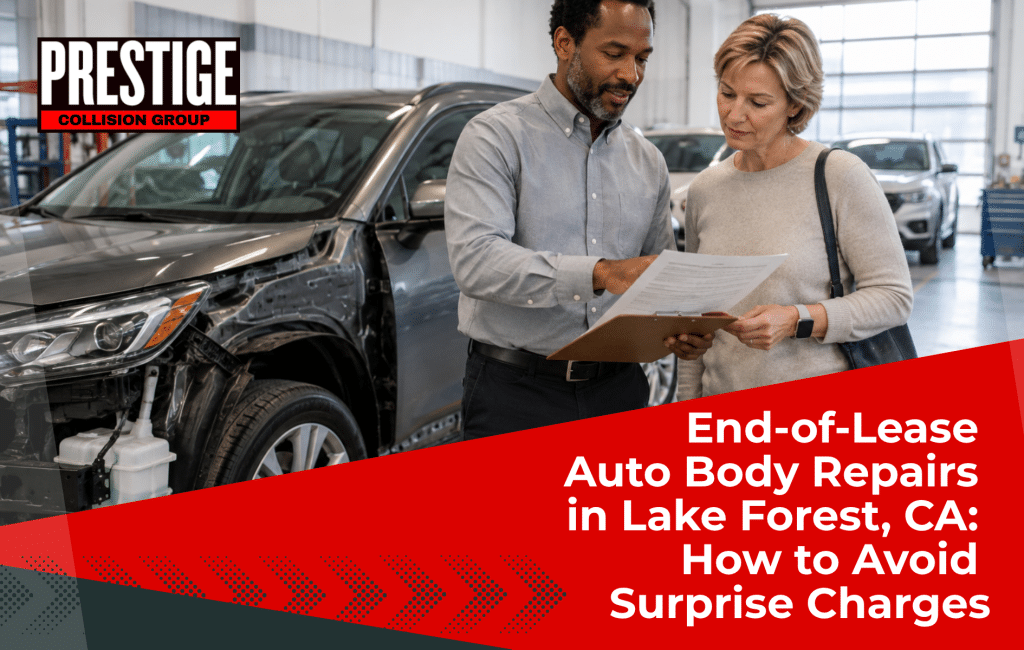
The final months of an auto lease can be exciting, especially if you are planning to move into a new vehicle. But the return process can also bring an unpleasant surprise if the leasing company identifies damage that falls outside its definition of normal wear.
A few parking lot dents, bumper scrapes, scratched paint, cracked glass, or damaged exterior panels may not seem significant during everyday driving. At lease return, however, the vehicle is typically evaluated according to standards established in the lease agreement.
The Federal Trade Commission explains that leased-vehicle customers can be responsible for excess wear and damage, missing equipment, and other end-of-lease obligations.
For drivers in Lake Forest, inspecting the vehicle early gives you time to understand the condition of the body and compare potential repair costs with the possibility of lease-return charges. Fabricante Auto Body, located at 26341 Dimension Dr, Lake Forest, CA 92630, United States, can evaluate dents, scratches, collision damage, and other exterior concerns before the vehicle is returned.
What Does “Excess Wear and Tear” Mean on a Car Lease?
There is no single universal list that applies to every lease.
Your leasing company establishes standards describing what it considers normal versus excessive wear.
The Consumer Financial Protection Bureau explains that most leases may impose fees for excessive mileage and wear and tear, and that the leasing company generally determines what qualifies as excessive wear.
Potentially chargeable exterior conditions may include:
- Larger dents
- Deep scratches
- Cracked paint
- Bumper damage
- Broken exterior trim
- Cracked or damaged glass
- Missing parts
- Significant body damage
However, the actual standard comes from your lease agreement and the lessor’s inspection guidelines.
Do not assume that every minor imperfection will automatically trigger a charge.
Why Should You Review Your Lease Before Repairing Anything?
Because the lease determines what you agreed to when you took possession of the vehicle.
Before scheduling repairs, review sections addressing:
- Wear and use
- Excess damage
- Mileage
- Missing equipment
- Disposition fees
- Return requirements
- Vehicle condition
Federal Regulation M, which governs consumer leases, requires applicable motor-vehicle leases to disclose the lessor’s standards for wear and use and to warn that customers may be charged for excessive wear under those standards.
This matters because repairing a tiny scratch that already qualifies as acceptable normal wear may provide little financial benefit.
The better approach is to first determine which conditions exceed the leasing company’s stated standards, then decide which repairs make sense.
When Should You Inspect Your Vehicle Before Lease Return?
Ideally, do not wait until the morning you return the vehicle.
Several weeks before the lease ends, examine the car in good lighting.
Look at:
- Front and rear bumpers
- Hood
- Doors
- Fenders
- Quarter panels
- Roof
- Trunk or liftgate
- Mirrors
- Windshield and windows
- Exterior trim
Walk around the vehicle slowly and view each panel from different angles.
Shallow dents and scratches are easier to identify when reflections move across the surface.
Starting early gives you time to:
- Review lease standards.
- Identify questionable damage.
- Obtain repair estimates.
- Compare your options.
- Complete repairs if appropriate.
Waiting until the final days removes most of that flexibility.
Should Small Dents Be Repaired Before Returning a Lease?
Sometimes.
Whether a dent should be repaired depends on:
- Size
- Depth
- Location
- Paint condition
- Lease wear standards
- Expected repair cost
A small, shallow dent with intact factory paint may qualify for Paintless Dent Repair or another localized repair depending on the vehicle and damage.
If the dent falls within the lessor’s normal-wear allowance, repairing it may not be necessary.
If it clearly exceeds the allowable size or severity, obtaining an estimate before turn-in gives you more information for deciding what to do.
The key is to avoid automatically repairing every blemish without first comparing it against your lease-return guidelines.
What Should You Do About Deep Paint Scratches?
Paint damage deserves closer attention when a scratch penetrates beyond the superficial finish.
Deep scratches can affect:
- Clear coat
- Color coat
- Primer
- Underlying substrate
Depending on the depth and size, repair may involve:
- Surface correction
- Spot refinishing
- Conventional panel refinishing
- Body repair if the panel is also dented
Professional auto body repair can determine whether the damage is limited to the finish or extends into the panel itself.
Again, compare the repair requirement with the lessor’s standards before authorizing work.
Should You Repair Bumper Scrapes Before Lease Turn-In?
Bumper scrapes are common because bumpers are frequently damaged during parking.
Potential bumper concerns include:
- Scuffs
- Deep scratches
- Cracks
- Dents
- Broken mounting points
- Missing trim
A superficial scuff may fall within allowable wear.
A cracked or deeply gouged bumper may be evaluated very differently.
Modern bumpers can also contain:
- Parking sensors
- Radar components
- Wiring
- Brackets
If the damage resulted from an actual impact rather than a superficial scrape, a professional inspection can determine whether anything behind the bumper cover was affected.
Fabricante Auto Body provides professional collision repair for damage requiring more than cosmetic surface correction.
Can Paintless Dent Repair Help Before Returning a Lease?
For qualifying dents, it may be an efficient option.
Paintless Dent Repair is designed to reshape certain dents without conventional sanding, body filler, primer, or repainting.
It is most appropriate when:
- Paint remains intact
- Metal is not severely stretched
- Dent geometry is suitable
- The area is accessible
Because the original factory finish remains intact, PDR can sometimes be useful for lease-return dents caused by:
- Door dings
- Parking lot impacts
- Minor hail
- Other shallow damage
Not every dent qualifies, so an inspection is still necessary.
What About Collision Damage That Was Never Repaired?
A lease-return inspection is not the ideal time to discover that previous accident damage remains unresolved.
Damage may include:
- Misaligned panels
- Cracked bumpers
- Broken trim
- Significant dents
- Unrepaired paint damage
- Structural concerns
If the vehicle was involved in an accident during the lease, review your insurance and repair records well before turn-in.
A proper repair may involve much more than simply improving appearance.
Professional collision repair can include:
- Damage analysis
- Replacement components
- Structural procedures
- Refinishing
- Diagnostic operations
- Quality verification
Addressing major accident damage before the leasing company evaluates the vehicle can provide more control over where and how the repairs are performed.
Does Insurance Cover Lease-Return Body Damage?
Insurance may cover damage resulting from a covered accident, but it generally does not exist simply to eliminate routine lease-return wear charges.
Whether a claim applies depends on:
- Cause of damage
- Policy coverage
- Deductible
- Claim circumstances
For example, a bumper damaged in a covered collision may potentially fall under collision coverage.
Minor accumulated door dings or normal wear may be a different matter.
Prestige Collision Group offers insurance claim management for qualifying collision repairs.
Before filing a claim solely because your lease is ending, compare the damage, deductible, repair cost, and policy terms.
Why Is a Pre-Return Inspection Useful?
Some leasing companies offer or require a vehicle inspection before the actual return date.
A pre-return inspection may identify:
- Body damage
- Tire issues
- Glass damage
- Missing equipment
- Excess wear
This can be valuable because it allows you to understand the leasing company’s concerns before the vehicle is surrendered.
If the lessor identifies chargeable body damage, you can then decide whether to:
- Accept the likely lease charge
- Obtain a body shop estimate
- Repair the damage beforehand
- Ask the leasing company for clarification
The CFPB notes that the lessor usually determines what qualifies as excessive wear and tear, making the actual inspection standards particularly important.
Should You Get an Auto Body Estimate Before Lease Return?
For questionable damage, yes.
An estimate gives you a reference point.
Suppose your leasing company identifies bumper damage that may result in an end-of-lease charge.
A body shop estimate lets you compare:
Option A: Repair the bumper before return.
Option B: Return the vehicle as-is and accept the lessor’s charge.
Neither option is automatically cheaper.
The point is to decide with actual information instead of guessing.
Lake Forest drivers can request an estimate before returning a leased vehicle.
Can You Repair the Damage at Any Auto Body Shop?
Your lease agreement may establish requirements regarding vehicle condition, but drivers should review the contract carefully rather than assuming any particular repair arrangement.
If repairs are performed, quality matters.
Poor bodywork can create new concerns such as:
- Paint mismatch
- Uneven panel gaps
- Visible repair marks
- Poor finish quality
- Incorrectly installed trim
Trying to save money with an improper cosmetic repair can create a different issue during turn-in.
Choosing a professional collision facility gives you documentation showing what was repaired and where the work was performed.
Why Might OEM-Certified Repair Matter on a Leased Vehicle?
Newer leased vehicles frequently contain modern structural materials and electronics.
OEM certification can matter when repairs involve:
- Structural components
- Advanced materials
- Cameras and sensors
- Manufacturer-specific procedures
- Specialized welding
- Diagnostic operations
Prestige Collision Group maintains multiple OEM certifications covering numerous vehicle manufacturers.
While every small lease-return blemish does not require OEM-certified collision repair, significant accident damage may benefit from a facility equipped to follow manufacturer-specific requirements.
Should You Keep Repair Records for a Leased Vehicle?
Yes.
Even though you do not own the vehicle outright, keeping documentation can still be useful.
Retain:
- Estimates
- Final invoices
- Supplemental estimates
- Parts records
- Calibration documents
- Insurance correspondence
- Before-and-after photos
These records can help establish that repairs were completed before turn-in.
If a question arises later about the vehicle’s condition, you have documentation rather than relying solely on memory.
Should You Photograph the Vehicle Before Returning It?
Yes.
Take clear, dated photographs showing the vehicle’s condition before surrendering it.
Photograph:
- Front
- Rear
- Both sides
- Each corner
- Wheels
- Windshield
- Interior
- Odometer
Take closer photos of repaired areas as well.
This documentation can be useful if you later have questions about a charge or disagreement over vehicle condition.
Photographs do not override lease terms or inspection results, but they provide a record of how the vehicle looked when you returned it.
What Other Charges Can Appear at the End of a Lease?
Body damage is only one potential expense.
The FTC and CFPB note that leases can include charges involving:
- Excess mileage
- Excessive wear
- Missing equipment
- Early termination
- Other lease-specific fees
Some leases also include disposition fees, which federal leasing regulations recognize as a separate possible end-of-lease charge.
That means repairing every dent does not necessarily eliminate all end-of-lease expenses.
Review your entire lease, not only the wear-and-tear section.
What Counts as Normal Wear on a Leased Vehicle?
The answer depends on the leasing company’s standards.
Reasonable everyday use might include certain minor imperfections, while more significant damage may exceed the allowable standard.
Federal Regulation M requires applicable leases to disclose their wear-and-use standards when such standards are imposed.
Do not rely solely on advice from friends who returned vehicles to a different manufacturer or leasing company.
Their acceptable wear standards may not match yours.
Find the official guide associated with your specific lease.
Is It Better to Repair Everything Before Turn-In?
No.
Repairing every imperfection can waste money if some conditions qualify as normal wear.
Instead, prioritize:
- Damage clearly exceeding lease limits
- Unrepaired collision damage
- Cracked or broken components
- Significant dents
- Deep paint damage
- Items specifically identified during pre-inspection
For borderline damage, compare repair cost with the potential lease-return charge.
A professional inspection can help you understand the physical repair requirements, while the leasing company determines whether the damage exceeds its contractual standards.
What If the Vehicle Has Previous Accident Repairs?
Review those repairs before turn-in.
Pay attention to:
- Panel fit
- Paint appearance
- Warning lights
- Exterior trim
- Door operation
- Windshield condition
If something from a previous repair does not appear correct, contact the repair facility before the lease ends.
Warranty coverage may still apply depending on the shop and repair.
Do not wait until the lease inspector identifies a problem to begin investigating whether previous workmanship needs attention.
What Should You Do 30 Days Before Returning Your Lease?
A simple preparation process can reduce surprises.
About One Month Before Return
- Review your lease agreement.
- Find the lessor’s wear-and-use guide.
- Check mileage.
- Inspect the body and glass.
- Schedule any available pre-return inspection.
After the Inspection
- Identify chargeable damage.
- Obtain repair estimates.
- Compare repair costs against expected charges.
- Complete worthwhile repairs.
Before Turn-In
- Clean the vehicle.
- Remove personal belongings.
- Gather all keys and equipment.
- Photograph the vehicle.
- Save repair documentation.
Being organized gives you more control than waiting until return day.
What Should You Ask an Auto Body Shop Before Lease-Return Repairs?
Useful questions include:
- Is this dent repairable without repainting?
- Does this scratch require refinishing?
- Can this bumper be repaired?
- Is there hidden collision damage?
- How much will the repair cost?
- How long will it take?
- Will the repair match the existing finish?
- Will I receive a detailed invoice?
The goal is to understand whether the proposed repair makes financial sense before the lease ends.
Drivers can learn more about the Fabricante Auto Body Lake Forest location when planning lease-return repairs.
Frequently Asked Questions
Can a leasing company charge me for dents?
Potentially. It depends on the size and severity of the dent and the lessor’s wear-and-use standards. The CFPB notes that leasing companies generally determine what qualifies as excessive wear.
Should I repair scratches before returning my leased car?
Repair scratches that exceed your lease’s wear standards when the repair makes financial sense. Minor acceptable wear may not need correction.
Can I be charged for bumper damage at lease return?
Yes, if the damage falls outside the lessor’s normal wear standards. Review your lease or pre-return inspection results before deciding whether to repair it.
Does my lease have to explain wear-and-tear standards?
Federal Regulation M requires applicable motor vehicle leases to disclose reasonable wear-and-use standards when the lessor imposes such charges.
Is excess mileage separate from body damage?
Yes. Mileage and excessive wear are separate potential end-of-lease charges.
Should I photograph my leased vehicle before returning it?
Yes. Photos create a record of the vehicle’s condition when you surrender it.
Where can I get lease-return auto body repairs in Lake Forest?
Fabricante Auto Body provides professional auto body and collision repair at 26341 Dimension Dr, Lake Forest, CA 92630, United States.
Returning a Lease Soon? Get Auto Body Damage Checked in Lake Forest, CA
Avoiding unexpected lease-return charges starts with understanding your contract rather than repairing every small mark on the vehicle. Review your lessor’s wear standards, inspect the car early, document its condition, and obtain professional estimates for damage that may exceed normal wear. That approach lets you compare repair costs with possible end-of-lease charges while there is still time to act.
If your leased vehicle has dents, scratches, bumper damage, or unresolved accident repairs, visit Fabricante Auto Body at 26341 Dimension Dr, Lake Forest, CA 92630, United States. The team can inspect the damage, explain available repair options, and provide a detailed auto body repair or collision repair estimate before your lease-return date.
